I was driving through a client’s neighborhood last week when I saw something that upset me so much that I slowed my car to watch.
A dog walker was moving down the sidewalk with three dogs in tow. Two of them were trotting along, heads down, just trying to keep pace. But the third one, a small dog at the end of a tight leash, had his body pressed as low as he could get it. Ears flat. Tail tucked. I could see the whites of his eyes. Every few steps, the slack in the leash ran out, and he was jerked forward, scrambling to catch up.
That dog was not on a walk. That dog was being dragged through an experience that seemed to terrify him.
And here’s the thing that really gets me, as someone who has spent years studying canine behavior and working with dogs through fear, reactivity, and anxiety: that scene probably looked completely normal to most people who passed by. Three dogs, one walker, moving efficiently through the neighborhood. Check.
But as a certified dog trainer, I can tell you that what that dog needed in that moment had nothing to do with covering ground. And it raises a question every dog owner deserves to think about: what is a walk actually for?
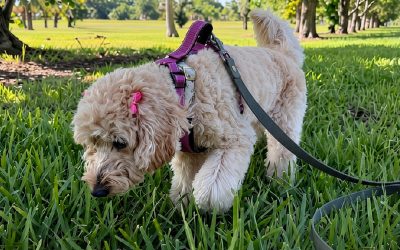
A sniff walk, sometimes called a decompression walk, is a dog walk structured around the dog’s pace and sensory needs rather than distance or speed. The dog leads, chooses where to stop, and is given unlimited time to sniff. Research in canine behavioral science shows that sniff walks reduce cortisol levels, lower arousal, and produce calmer, more satisfied dogs than the same duration spent on a brisk leash walk. A 20-minute sniff walk can be more mentally exhausting, in the best way, than an hour of power walking.
We’ve Been Thinking About Dog Walks All Wrong
Most of us were taught, either directly or by cultural osmosis, that a good dog walk means distance and pace. Get the dog tired. Burn off the energy. The more ground you cover, the better the walk. If your dog sleeps for two hours afterward, you did your job.
I understand the logic. Tired dogs are calm dogs, and calm dogs are easier to live with.
But here’s what that thinking misses entirely: the goal of a walk isn’t to exhaust your dog. It’s to fulfill them. Those are very different things, and confusing them is why so many dogs are still anxious, reactive, and wound up even when they’re getting walked twice a day.
What Your Dog’s Nose Is Actually Doing
Dogs experience the world primarily through scent. While humans are visual creatures who lead with our eyes, dogs are olfactory creatures who lead with their noses. Their noses contain up to 300 million olfactory receptors compared to our approximately 6 million. The part of a dog’s brain devoted to analyzing smells is, proportionally, about 40 times larger than ours.
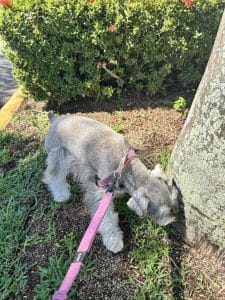
When your dog stops to sniff a patch of grass, a fire hydrant, or the base of a telephone pole, they are not stalling. They are not being difficult or stubborn. They are reading. That spot on the sidewalk is a full news feed: which animals passed by, when, whether they were stressed or relaxed, what they ate, whether they were sick. Your dog is gathering information about their world in the most natural, species-appropriate way possible.
The Science Behind the Sniff
Research in canine behavioral science shows that allowing dogs to sniff freely on walks produces calmer, more satisfied dogs than the same amount of time spent walking briskly on a tight leash. A 20-minute decompression walk where your dog gets to explore at their own pace can tire them out more effectively than an hour of structured heel work, and without any of the cortisol spike that comes from keeping a dog in a constant state of suppressed impulse.
This is why trainers and behaviorists increasingly talk about sniff walks and decompression walks as some of the most powerful tools available for reducing anxiety, reactivity, and arousal in dogs. Not training. Not commands. Just letting dogs be dogs.
So What’s Wrong With Pack Walks?
I want to be clear that I’m not painting every group dog walk with the same brush. There are excellent, thoughtful, certified trainers and handlers who run small group walks with carefully matched dogs and who prioritize each dog’s comfort throughout.
That is not what I’m talking about.
I’m talking about the pack walk as it’s commonly sold and marketed: the idea that putting your dog in a large group and moving them through the world at a human’s pace is inherently enriching, even therapeutic. That the social experience of being in a group is what your dog needs most. That your dog comes home tired, and that means it worked.
Pack Walks Optimize for the Walker, Not the Dog
Moving a group of dogs efficiently through a neighborhood requires keeping them all moving at roughly the same pace, in roughly the same direction, on leashes that stay reasonably managed. That means every time one dog wants to stop and sniff, they have to keep moving. Every time a dog hits a threshold of overstimulation from being this close to unfamiliar dogs, they don’t get distance. They get more leash pressure. The whole structure of a pack walk is built around human convenience and the visual impression of control.
And I’ll say the quiet part out loud: pack walks, as commonly sold, are often more of an ego boost for the humans involved than a service to the dogs. A person walking five dogs looks impressive. It signals confidence and control. It photographs well. But the dog being dragged at the end of a tight leash doesn’t care how it looks. He just wants it to stop.
Not All Dogs Want to Be in a Group
Dogs are not wolves. The pack model of dog behavior has been largely debunked in modern behavioral science, and the assumption that dogs are inherently social pack animals who thrive in group settings is simply not accurate for a large portion of the dog population. Many dogs find close proximity to unfamiliar dogs stressful, even if they’re not overtly reactive. They may not growl or lunge, but they may just be quietly miserable, managing their discomfort the whole time, flooding in stress hormones with nowhere to go.
Signs Your Dog Is Stressed on a Walk
- Tail tucked or held very low
- Ears flat against the head
- Body posture low to the ground
- Refusing to move forward
- Panting excessively when it is not hot
- Frequent yawning or lip licking
- Whale eye, meaning the whites of the eyes are visible
- Pulling hard to get away from something
Any of these signals mean your dog needs more space, a slower pace, or a break from the current environment. These are your dog’s only way of telling you something isn’t working.
What Your Dog Actually Needs on a Walk
The good news is that giving your dog a genuinely enriching walk is not complicated. It just requires a mindset shift.
How to Do a Decompression Walk (Step by Step)
- Use a longer leash. A 15 to 20 foot long line gives your dog room to move, sniff, and explore without being right at your hip.
- Let them lead the pace. Follow your dog rather than directing them. Let the walk be theirs.
- Protect the sniff. When your dog stops to investigate something, resist the urge to move them along. Give them time. Count to 30 if you have to. Let them finish.
- Choose low-stimulation routes when possible. A quieter street or a grassy area with interesting smells beats a crowded sidewalk for decompression purposes.
- Ditch the destination mindset. A successful walk is not about distance. It’s about whether your dog got to be a dog. Sometimes that’s 20 minutes in a three-block radius. That walk counts.
Consider your dog’s social preferences, too. Not every dog wants dog friends on walks. Some dogs are happiest one-on-one with their person, exploring their neighborhood at their own pace, without the added stress of managing proximity to dogs they didn’t choose.
The Bottom Line
When I saw that terrified little dog being dragged down the sidewalk last week, my heart broke a little. Not because the dog walker was necessarily a bad person, but because our culture has so thoroughly convinced itself that keeping dogs moving equals keeping dogs happy that we don’t even stop to ask whether the dog is okay.
Your dog does not need to cover miles. They do not need to march in formation with five dogs they’ve never met. They do not need a power walk that checks a box on your to-do list.
Dogs need to sniff the weird patch of grass by the mailbox for two full minutes. They need to double back and investigate whatever they smelled on that bush. They need a walk that belongs to them.
That’s not a luxury. That’s what they’re asking for every single time you clip that leash on. The question is whether we’re listening.
Katie is the owner and lead trainer at Dances With Dogs, a force-free mobile dog training service based in Miami, FL. She holds certifications including KPA CTP, CPDT-KA, FFCP, FDM, and CSAT, and specializes in working with dogs through fear, reactivity, and anxiety using science-backed, humane methods.
What is a sniff walk for dogs?
A sniff walk, also called a decompression walk, is a walk where the dog leads the pace and is given unlimited time to sniff and explore. Unlike a brisk power walk, the goal is mental enrichment and stress relief, not distance. Research shows sniff walks reduce cortisol levels and calm anxious or reactive dogs more effectively than exercise-based walks.
Are pack walks good for dogs?
Pack walks can work well when dogs are carefully matched, groups are small, and each dog’s comfort is prioritized. However, many commercially offered pack walks prioritize efficiency over individual dog needs, forcing dogs to keep moving even when they’re stressed. Dogs with anxiety, fear, or social selectivity often do much better on individual or one-on-one walks.
How long should a sniff walk be?
Even 15 to 20 minutes of true decompression sniffing can be as mentally tiring as an hour-long brisk walk. There’s no required length. The key is that the dog sets the pace, chooses where to stop, and isn’t rushed. Quality of exploration matters far more than distance or duration.
What is a decompression walk for dogs?
A decompression walk is any walk where the dog is allowed to move freely, sniff at will, and explore the environment at their own pace, usually on a long line or in a low-stimulation area. The goal is to lower the dog’s arousal level and allow their nervous system to reset. Especially helpful for reactive, anxious, or overstimulated dogs.
Is it okay if my dog sniffs the whole walk?
Yes. Sniffing is the most natural, species-appropriate thing your dog can do on a walk. It provides mental stimulation, lowers stress hormones, and gives your dog information about their world. A walk where your dog sniffs the entire time is a very successful walk.
What are the signs my dog is stressed on a walk?
Watch for a tucked tail, ears flat against the head, low body posture, refusing to move forward, excessive panting when it is not hot, frequent yawning or lip licking, whale eye, or pulling hard to get away from something. Any of these signals mean your dog needs more space, a slower pace, or a break from the current environment.

Katie Casell (KPA CTP, CPDT-KA, CSAT, FFCP, FDM, CPPS) is the founder of Dances With Dogs and a force-free trainer with over two decades of experience helping families build lasting bonds with their dogs. Her team of trainers, walkers, adventure specialists, and cat sitters is known for detail-oriented, reliable care that never uses fear or pain.