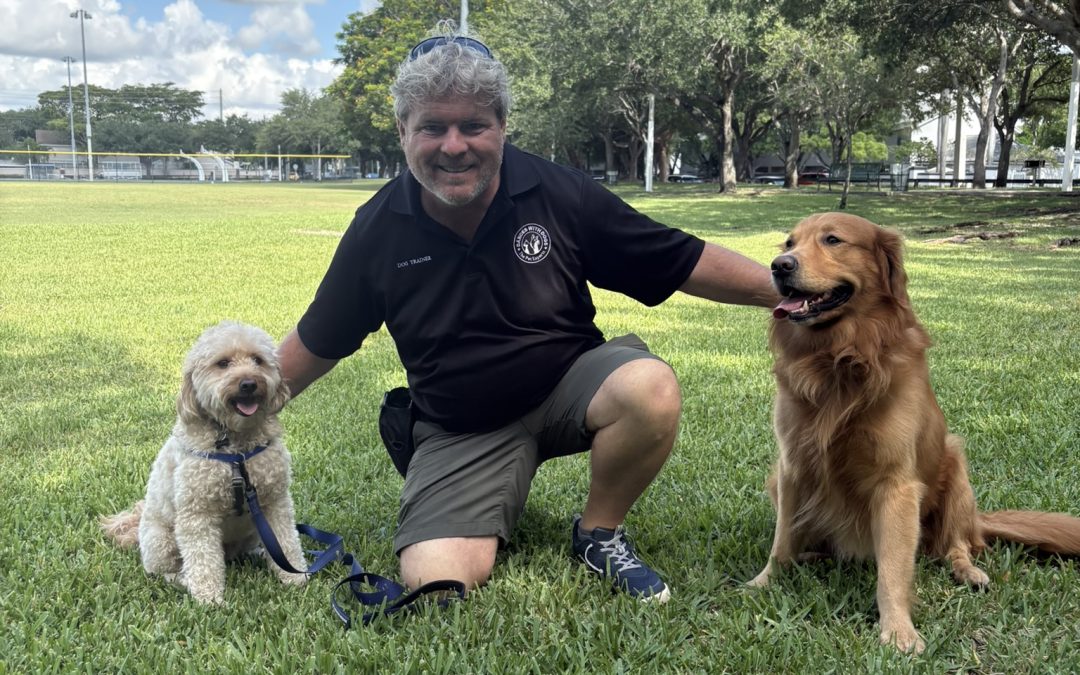
Training dogs at a South Miami park, where real-world distractions help build lasting focus and confidence.
“Rover dog training Miami is officially here, and if you live in Pinecrest, Palmetto Bay, South Miami, or anywhere else in Miami-Dade, you’ve probably already noticed it. Rover, the pet care marketplace best known for dog walking and pet sitting, has expanded into training. On the surface, it looks convenient. Open the app, browse a list of providers, book a session, done.
But before you tap “book,” it’s worth understanding what you’re actually getting, and what you’re not.
The Trend: Pet Care Apps Are Moving Into Training
This isn’t happening in isolation. Pet care marketplaces built their businesses on matching pet owners with independent contractors for short, transactional services like walks and overnight sits. Now that the walking and sitting markets are saturated, these platforms are looking for new categories to expand into, and training is the obvious next step.
The model is the same one that built the rest of the app: you submit a request, the app surfaces a list of contractors in your area, and you pick one based on a profile and a handful of reviews. Even for something as simple as a walk, that model leaves plenty of room for things to go wrong. Training is a different animal, literally and figuratively.
Dog training isn’t a single transaction. It’s a process. It requires understanding your dog’s specific behavior history, your home environment, your family’s daily routine, and how your dog responds under real-world conditions, not just in a controlled session. A marketplace model wasn’t built to deliver that kind of continuity, and stretching it to cover training creates some real gaps.
What’s Actually Different: Four Things to Watch For
1. No Continuity Between Sessions
Even booking a walk through an app means handing your dog over to a different stranger each time, with no guarantee of reliability or follow-through. That alone is a real risk, not a minor inconvenience. Add training into the mix, and the stakes go up considerably. Dog training builds on itself. A trainer needs to remember what worked last week, what didn’t, and how your dog’s behavior has shifted since the last session. That kind of inconsistency is exactly the concern many pet owners raise about gig-based platforms, which is worth keeping in mind with Rover dog training Miami sessions specifically.
With a gig-based model, there’s no guarantee the same contractor shows up twice. Your dog may work with one person on leash manners, a different person on recall, and a third on basic commands, with none of them communicating with each other or building on the last session. That’s not training progress. That’s three strangers starting over, three separate times.
2. No Employee Accountability
Independent contractors on a marketplace platform aren’t employees. They set their own methods, their own pace, and in many cases, their own equipment choices. The platform connects you to them and processes the payment, but it isn’t supervising the actual training happening in your backyard.
That matters more than people realize. A trainer who answers to a business owner, follows a documented methodology, and is accountable for outcomes operates differently than someone who logs into an app, takes a job, and moves on to the next one. If a session goes poorly, who do you call? With a true training business, there’s a person whose name is on the door and whose reputation depends on getting it right.
3. No Miami-Specific Expertise
Which matters a lot more with Rover dog training Miami sessions than people realize. Dog training doesn’t happen in a vacuum. It happens on the actual sidewalks, parks, and streets where you and your dog live. Miami has its own set of training challenges: the iguanas that show up uninvited in Pinecrest yards, the heat that changes how and when you can safely train, the density of off-leash dogs, and the specific layout of neighborhoods in South Miami and Brickell where leash-reactive dogs are likely to encounter triggers on a daily walk.
A contractor matched through a national app may have no familiarity with any of that. They may be new to the area, splitting time between several gig platforms, or simply unaware of the local conditions that shape how training actually needs to be applied here. A trainer who has worked Miami-Dade neighborhoods for years already knows where the distractions live and how to plan around them.
4. No Relationship With Your Dog
This is the piece that matters most and gets talked about least. Dogs don’t generalize trust the way people do. A dog that’s comfortable with one person isn’t automatically comfortable with the next. Every new face means a slower start, more time spent on basic trust-building, and less time spent on actual progress.
This is especially true for dogs with fear, anxiety, or reactivity. A dog who is nervous around new people doesn’t benefit from meeting a rotating cast of trainers. That does consist of dogs who understand their specific triggers and have earned their trust over multiple visits. Without that, training stalls, or worse, regresses.
5. No Guarantee of Real Experience
This is one of the biggest blind spots with Rover dog training. Miami currently has no way around. Dog training is an unregulated industry. Anyone can call themselves a trainer, regardless of education, certification, or hands-on experience. That’s true everywhere, app or no app, but a marketplace model makes it worse, since there’s no one vetting whether a contractor actually knows what they’re doing beyond a profile and a few reviews.
That gap matters with any dog. It becomes a recipe for disaster when fear, anxiety, or reactivity are involved. Working with a dog who bites out of fear, melts down around other dogs, or panics during handling takes real clinical knowledge, not guesswork. Get it wrong, and you’re not just failing to make progress. You can make the underlying fear or aggression worse, and put your dog, yourself, or someone else at risk.
What Real Training Looks Like, Beyond Rover Dog Training Miami
Good training looks almost nothing like what a marketplace app delivers. It starts with one trainer who works with your dog consistently, session after session, building a real relationship instead of starting from zero every time.
That trainer learns your dog’s personality: whether they’re food-motivated or toy-motivated, whether they shut down under pressure or push back against it, what specific situations trigger anxiety or reactivity, and how your dog’s behavior shifts depending on time of day, weather, or who else is in the house. None of that comes from a single session. It comes from showing up repeatedly and paying attention.
Real training also adapts to where you actually live. A trainer working with you in South Miami should already know how to structure a session around the heat of a Miami summer afternoon, how to use the open spaces at a local park without setting a reactive dog up to fail, and how to plan a walking route through your neighborhood that builds confidence instead of triggering a meltdown. That kind of local fluency isn’t a bonus feature. It’s the difference between training that works in theory and training that works on your actual street.
And because the training is force-free, it relies on building trust and motivation rather than corrections or pressure. That approach depends even more heavily on relationship and consistency. A dog learns to trust the process because they’ve learned to trust the person guiding it.
The Bottom Line for Miami Dog Owners
Pet care apps come with the same fundamental problem, whether you’re booking a walk or a training session: a stranger, vetted only by a profile and a few reviews, is left alone with your dog, with no one supervising what actually happens. That accountability gap is exactly the kind of structural risk that has led to dogs being lost, injured, or mishandled while in the care of app-matched contractors. Training raises the stakes further, since it means putting a vulnerable, often anxious dog through repeated unsupervised sessions with rotating strangers instead of just one walk.
If your dog has fear, anxiety, reactivity, or you simply want training that sticks instead of starting over every session, you want a real trainer with a real history in your neighborhood and real accountability, not a rotating contractor from a national app.
Dances With Dogs has been training dogs across Miami-Dade since 2002, using force-free methods built on relationship and consistency, not pressure or punishment. Every session is handled by a trainer who knows your dog, knows your neighborhood, and is personally accountable for the results.
If you’re weighing Rover dog training Miami options against a real local trainer, here’s the difference that matters most. Whether you’re looking for dog training Miami pet owners trust or specialized help with fear and reactivity, are you ready to see the difference a real relationship makes? Book a free 30-minute consult with Dances With Dogs today and find out what training built on consistency, trust, and local expertise looks like for your dog.
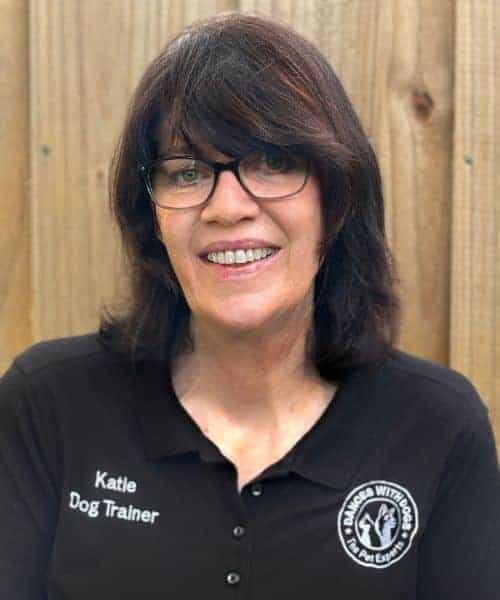
Katie Casell (KPA CTP, CPDT-KA, CSAT, FFCP, FDM, CPPS) is the founder of Dances With Dogs and a force-free trainer with over two decades of experience helping families build lasting bonds with their dogs. Her team of trainers, walkers, adventure specialists, and cat sitters is known for detail-oriented, reliable care that never uses fear or pain.