What Is Board and Train, and Is It Right for My Dog?
You’ve tried the YouTube videos. You’ve read the articles. Maybe you even attempted a group class. But your dog is still pulling your arm out of the socket on walks, ignoring every command you know, or turning every visitor into a four-legged chaos event. And now someone’s mentioned board and train, and you’re wondering: what exactly is that, and could it actually work?
Here’s the honest answer. Board and train can be a genuinely powerful option for the right dog and the right goals. It’s also a program that gets a bad reputation when it’s done poorly. This post will walk you through how board and train actually works, what makes force-free board and train different, who it’s a good fit for, and who it isn’t, so you can make a decision that’s actually right for your dog.
What Is Board and Train?
Board and train, sometimes called residential dog training or send-away training, is a program where your dog stays with a professional trainer for an extended period of time, typically two to six weeks, instead of attending periodic private lessons with you.
During that time, the trainer works with your dog every day. Rather than your dog practicing new skills once a week in a session with you and then going home to potentially rehearse the opposite all week long, board and train creates a structured learning environment with consistent daily reinforcement.
At Dances With Dogs, our board and train trainer works with your dog in a private home, not a commercial kennel, not a training facility with runs full of barking dogs. Your dog lives as part of a household. They sleep indoors, follow a routine, and learn in the kind of real-life environment they’ll be coming home to. That matters a lot, and we’ll explain why shortly.
How Is Force-Free Board and Train Different?
Not all board and train programs are created equal. In fact, some of the worst things that can happen to a dog’s behavior happen inside board and train programs that rely on punishment, correction collars, shock collars (aka e-collars), or dominance-based methods.
When a dog is trained through fear or pain, even if the behavior looks better in the short term, you often get what trainers call behavior suppression rather than genuine learning. The dog isn’t doing the right thing because they understand what’s wanted. They’re doing it because they’re afraid of what happens if they don’t. That’s not the same thing, and it doesn’t hold up when they get home to you.
Force-free board and train is built on positive reinforcement: rewarding the behaviors you want so your dog actively chooses to repeat them. Every session, every walk, every interaction is designed to build your dog’s confidence and their relationship with the trainer, not to suppress behavior through discomfort.
At Dances With Dogs, we don’t use prong collars, shock collars, or any aversive tools or techniques. Not because we’re being ideological about it, but because the science is clear that reward-based training produces more reliable, more generalized, and longer-lasting results without the risk of fallout. If you want to dig into what force-free really means and what to look for when evaluating a trainer, we’ve written about that here.
| What Our Program Includes
• Daily training sessions with a force-free trainer • Real-life household environment (not a kennel) • Consistent routine, structure, and enrichment every day • Written progress updates throughout the program • Transfer sessions when your dog comes home, where you learn everything • Ongoing support after the program ends |
What Board and Train Is Best For
Board and train works particularly well for dogs and families in a few specific situations.
Foundation skills and manners
If your dog needs to build a solid foundation, loose leash walking, reliable recall, door manners, sit, down, stay, leave it, and impulse control, board and train can accomplish in two to four weeks what often takes months in a weekly lesson format. The daily repetition is the difference.
Busy households
If you have a full schedule, kids, a demanding job, or all three, finding the time to do consistent daily training at home is genuinely hard. Board and train takes that burden off your plate during the intensive phase. You still learn everything during transfer sessions, you’re just not responsible for the initial skill-building.
Dogs who need a reset
Sometimes a dog has developed patterns of behavior at home, counter surfing, jumping, door dashing, reactivity on walks, that are hard to interrupt in the environment where they’ve been rehearsed for months or years. A new environment with a new structure can break those patterns faster than working in the place where they’re most ingrained.
Puppies building good habits early
We accept puppies as young as 10 weeks old who have completed at least two rounds of core vaccinations. Early foundation training through board and train can set a puppy up for a lifetime of good behavior, preventing the problem habits that are much harder to undo later.
What Board and Train Is NOT For
We want to be direct about this because getting it wrong here isn’t just a bad outcome; it can make certain issues significantly worse.
Aggression cases
Aggression toward people or other dogs requires the owner’s involvement from the very beginning of the training process. You are part of the equation. Your dog’s relationship with you is what needs to change, and that can’t happen if you’re not there. We don’t accept aggression cases for board and train, and you should be skeptical of any program that does.
Separation anxiety
Separation anxiety is a specific condition, not general disobedience, and not something board and train resolves. In fact, sending a dog with separation anxiety to a board and train program can make things significantly worse. This requires a protocol-driven approach where the owner is present throughout, because the dog’s distress can be specifically tied to being away from their people and being left alone. If you’re dealing with separation anxiety, we have a certified specialist for that. It’s a different service with a very different process.
Complex behavior cases
Dogs with a history of trauma, significant fear issues, or layered behavior problems that require deep behavioral modification are not board and train candidates. These cases require a thoughtful, individualized plan, often involving collaboration with a veterinary behaviorist, and require the owner to be closely involved.
The Transfer Session: Where Your Work Begins
Here’s the thing that most people don’t think about when they picture board and train: the work doesn’t end when your dog comes home. That’s when your part begins.
At the end of every program, we conduct transfer sessions, hands-on coaching where you learn exactly what your dog learned, how they learned it, and how to maintain and build on those skills. You’ll practice with your dog while your trainer coaches you in real time.
This is why the owner’s commitment matters even in a board and train program. The trainer can teach your dog a lot in two to six weeks. But if that learning doesn’t get maintained and reinforced at home, it fades because that’s how learning works for every species, including ours. The transfer session is where we make sure that doesn’t happen.
How Board and Train Compares to Our Other Training Options
Not sure whether board and train is the right fit for your situation? Here’s a quick comparison to help you think it through.
| Private Coaching | Day Training | Board and Train | |
| Owner does the training | Yes — with coaching | No — trainer does it | No — trainer does it |
| Dog stays home | Yes | Yes | No |
| Daily trainer access | No | 4x per week | Yes, daily |
| Fastest skill-building | Slower | Moderate | Fastest |
| Owner involvement | High throughout | High in transfer sessions | High in transfer sessions |
| Best for | Committed owners with time | Busy owners, great results | Dogs needing an intensive reset |
Learn more about all of our training options on our Miami dog training page.
Our Board and Train Programs
We offer three program lengths, designed to match your dog’s starting point and goals:
- Foundations (2 weeks) — Ideal for puppies and dogs who need a solid foundation in basic manners and impulse control.
- Transform (4 weeks) — For dogs with more established habits to work through, or families with a longer list of goals.
- Elevate (6 weeks) — Our most comprehensive program, for dogs who need an extended reset and a full behavioral foundation from the ground up.
All programs include daily training, household structure, transfer sessions, and support after your dog comes home.
How to Get Started
The first step is a phone consultation; a no-pressure conversation where we learn about your dog, your goals, and whether board and train is genuinely the right fit. We’re not going to enroll a dog who isn’t a good candidate. That’s not good for the dog, it’s not good for the outcome, and it’s not how we operate.
If it’s a great fit, we’ll walk you through the program, answer every question you have, and set a start date. From there, your dog is in good hands — and you’ll be hearing from us regularly throughout the program.
Ready to find out if board and train is right for your dog? Contact us here or call or text us at 786-299-1552.
| About the Author
Katie Casell, KPA CTP, CPDT-KA, FFCP, FDM, CSAT Katie is the founder of Dances With Dogs, Miami’s force-free dog training and pet care company, serving Miami-Dade County since 2002. She holds certifications from the Karen Pryor Academy, CATCH Canine Trainers Academy, and is one of a small number of Certified Separation Anxiety Trainers (CSAT) practicing in South Florida. Katie and her team specialize in helping Miami families build lasting, joyful relationships with their dogs — without intimidation, pain, or force. |
Frequently Asked Questions About Board and Train
How long does board and train last?
We offer three program lengths: 2 weeks (Foundations), 4 weeks (Transform), and 6 weeks (Recalibrate). The right length depends on your dog’s starting point, current habits, and your goals. We’ll help you figure out which is the best fit during your initial phone consultation.
Where does my dog stay during board and train?
Your dog stays in our trainer’s private home, not a kennel or commercial facility. They live as part of the household, which is a much healthier learning environment than a facility full of unfamiliar dogs and unpredictable noise.
Do you accept puppies for board and train?
Yes. We accept puppies as young as 10 weeks old who have completed at least two rounds of core vaccinations. Early foundation training is one of the best investments you can make for a puppy’s future behavior.
Will my dog remember what they learned when they come home?
This is one of the most common concerns, and it’s exactly why transfer sessions are built into every program. You’ll spend dedicated time with your trainer learning what your dog practiced, how to ask for it, how to reinforce it, and how to build on it. Skills transfer when the owner learns, too.
Do you accept dogs with aggression for board and train?
We don’t. Aggression cases require the owner to be present from day one; the relationship between you and your dog is central to the work. Board and train, by design, removes you from that equation. We also don’t accept separation anxiety cases for the same reason. If you’re dealing with either of those issues, reach out, and we’ll talk you through the right option.
Is board and train force-free?
Yes, completely. We don’t use prong collars, shock collars, choke chains, or any aversive tools or methods in any of our programs, ever. All training is positive reinforcement, science-backed, and designed to build your dog’s confidence alongside their skills.
How is board and train different from day training?
Day training is similar in that our trainer works with your dog without you present, but your dog stays in your home. Board and train is residential: your dog stays with the trainer for the full program. Day training is a great option if you’d prefer your dog to stay at home; board and train is ideal when you want the most intensive daily immersion. You can compare both options on our training page.
How do I know if board and train is right for my dog?
The phone consultation is exactly for this. We’ll talk through your dog’s history, current behavior, your goals, and your schedule, and give you an honest assessment of whether board and train is the right fit, or whether a different program would serve you better.
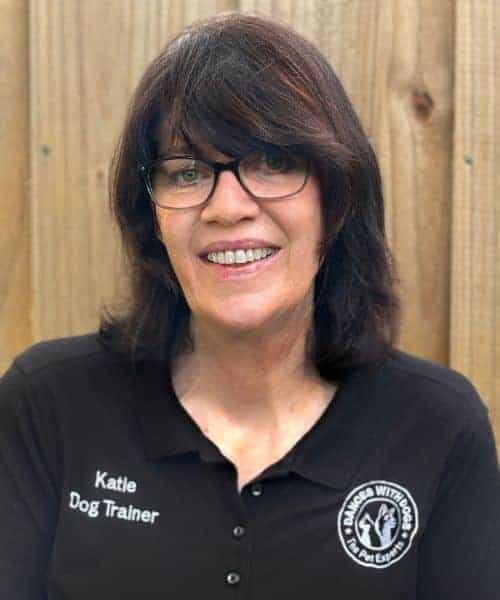
Katie Casell (KPA CTP, CPDT-KA, CSAT, FFCP, FDM, CPPS) is the founder of Dances With Dogs and a force-free trainer with over two decades of experience helping families build lasting bonds with their dogs. Her team of trainers, walkers, adventure specialists, and cat sitters is known for detail-oriented, reliable care that never uses fear or pain.