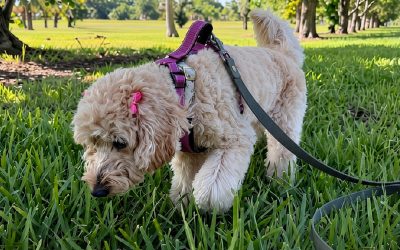

Recently, one of my clients called me feeling completely defeated. Her four-month-old puppy had been an absolute handful for the past few days, and she could not figure out what had changed. He was jumping, nipping, getting into everything, and just would not settle. As we talked it through, the answer became clear: life had gotten busy, she had skipped the walks, and her pup had been cooped up, with nowhere to put all that energy. She was not doing anything wrong as an owner. Her puppy was not broken or being “bad.” He was simply a young dog full of energy and no outlet for it. And that is something we see all the time.
When Good Puppies Go Wild
You’ve probably seen it. Maybe you’re living it right now. One minute your puppy is curled up like an angel, and the next they’re launching off the couch, shredding a throw pillow, biting at your ankles, grabbing your pant leg, and running laps around the living room like their tail is on fire.
Here’s what nobody told you at the breeder, shelter, or rescue: your puppy isn’t being bad. Your puppy is desperately, urgently, biologically begging you for something they cannot live without.
They need to move.
The Science Behind the Chaos
Puppies, especially high-energy breeds like Border Collies, Australian Shepherds, Vizslas, Labrador Retrievers, Jack Russell Terriers, and Boxers, are neurologically wired for activity. Their brains are flooded with dopamine when they move, explore, sniff, and engage with their environment. When that physical outlet is blocked, that energy doesn’t just disappear. It gets rerouted.
What does rerouted puppy energy look like? It looks like destruction, excessive barking, nipping, jumping, and an inability to settle. Your dog looks completely untrainable and out of control, when really, they just need an outlet for all that pent-up energy.
Research in canine behavioral science is clear: physical and mental stimulation are not luxuries for dogs. They are biological necessities. A puppy who doesn’t receive adequate exercise experiences elevated cortisol levels, the stress hormone, which creates a feedback loop of arousal, reactivity, and behavioral dysregulation. That energy finds a new outlet instead. And that outlet? Destruction, excessive barking, nipping, jumping, and an inability to settle.
The Rule You Need to Know
There is a guideline in the dog training world called the five-minutes-per-month rule, and it is worth taking seriously.
The guideline is simple: for every month of your puppy’s age, they need approximately five minutes of structured exercise, twice a day. A four-month-old puppy, for example, needs around 20 minutes of exercise per session, not a grueling five-mile hike or a jog around the block, but focused, intentional movement.
This rule exists for an important reason: puppies’ growth plates are still developing, and excessive high-impact exercise damages developing joints. The goal isn’t to exhaust your puppy into submission; it’s to meet their physiological need for movement in a way that’s safe for their developing body.
The good news? Twenty minutes is completely manageable. The challenging reality? Life doesn’t always cooperate. If you’re recovering from an injury, managing a chronic health condition, working long hours, caring for family members, or simply stretched in seventeen directions at once, even a short daily walk can feel impossible. And that gap between what your puppy needs and what you’re able to give is where the behavioral problems breed.
It’s Not Just About Walks
Here’s something that surprises a lot of people: a tired dog is not always a dog that ran five miles. Mental stimulation and enrichment can be just as exhausting, sometimes more so, than physical exercise alone.
Sniffing, for instance, is neurologically demanding for dogs. A fifteen-minute sniff walk, where your puppy is allowed to stop and explore every blade of grass at their own pace, engages their brain far more deeply than a fast-paced power walk where they’re constantly being redirected to “heel.” Sniffing activates the parasympathetic nervous system, the rest-and-digest state, which actually helps puppies decompress and settle afterward.
Puzzle feeders, structured play sessions, and even basic training exercises (sit, down, touch, look at me) all burn cognitive energy in ways that calm the nervous system. The most effective approach combines physical movement with mental engagement, and you don’t need anything elaborate or expensive.
A twenty-minute outing that includes a short walk, time to sniff freely, and a few rounds of name recall in the backyard will leave your puppy far more settled than a quick ten-minute trot around the block with no engagement at all.
When You Just Can’t Do It Alone
Let’s be honest about something: the “just exercise your dog more” advice, while accurate, can feel tone-deaf if you’re physically limited, working full time, juggling your kids’ extracurricular activities, or simply overwhelmed. Puppyhood is hard. High-energy puppyhood is harder. And the shame spiral that comes from feeling like you’re failing your dog doesn’t help anyone, least of all your puppy.
This is exactly why professional support exists.
At Dances With Dogs, our dog walking team isn’t just there to give your puppy a bathroom break. We’re trained, force-free professionals who understand puppy development, body language, and what meaningful exercise actually looks like for a young dog. We don’t just take your puppy around the block and hand them back. Our team is all about engagement and enrichment. We give your puppy the kind of experience that fills their cup and gives you back your sanity.
Whether it’s a structured leash walk through a safe, low-traffic area, a backyard play session that incorporates enrichment and basic manners, or a combination of both, we tailor every visit around your puppy’s specific stage of development. A four-month-old toy breed has very different needs than a four-month-old Labrador, and we know the difference.
We also take vaccination status seriously. Young puppies haven’t fully developed their immune systems yet, and we are meticulous about where we take them and what surfaces they come into contact with. We never compromise your puppy’s health in the name of convenience.
What Changes When Needs Are Met
The transformation that happens when a high-energy puppy finally gets what they need is nothing short of remarkable, and it happens faster than most owners expect.
Within days of introducing regular, appropriate exercise and enrichment, families report that their puppies are calmer in the house, more focused during training, less likely to nip or jump, and easier to settle at bedtime. The behaviors that felt overwhelming, zoomies, destruction, incessant barking, don’t disappear overnight, but they reduce dramatically as the puppy’s baseline arousal level comes down.
This is the foundation of everything we do at Dances With Dogs. A puppy who is physically and mentally fulfilled is a puppy who can actually learn. It’s a puppy who can absorb training. One that can bond with their family. Your puppy can be the dog everyone hoped they’d be.
You Don’t Have to Do This Alone
If you’re reading this and recognizing your own situation, a puppy who seems out of control, a schedule that doesn’t leave room for walks, a body that isn’t cooperating, please know that asking for help isn’t giving up. It’s smart ownership.
Our dog walking team is here for exactly this. We serve families across Miami who love their dogs deeply and simply need a partner in their care. Whether you need us once or twice a week or every single day, we’ll show up for your puppy with the same expertise and force-free philosophy that defines everything we do.
Because your puppy isn’t bad. They’re just full of energy. And we can help with that.
Ready to take the pressure off? Contact Dances With Dogs today to learn more about our dog walking and enrichment services. Because every puppy deserves to be tired for the right reasons.
Here’s what nobody told you at the breeder, shelter, or rescue: your puppy isn’t being bad. Your puppy is desperately, urgently, biologically begging you for something they cannot live without.
They need to move.
The Science Behind the Chaos
Puppies, especially high-energy breeds like Border Collies, Australian Shepherds, Vizslas, Labrador Retrievers, Jack Russell Terriers, and Boxers, are neurologically wired for activity. Their brains are flooded with dopamine when they move, explore, sniff, and engage with their environment. When that physical outlet is blocked, that energy doesn’t just disappear. It gets rerouted.
What does rerouted puppy energy look like? It looks like destruction, excessive barking, nipping, jumping, and an inability to settle. Your dog looks completely untrainable and out of control, when really, they just need an outlet for all that pent-up energy.
Research in canine behavioral science is clear: physical and mental stimulation are not luxuries for dogs. They are biological necessities. A puppy who doesn’t receive adequate exercise experiences elevated cortisol levels, the stress hormone, which creates a feedback loop of arousal, reactivity, and behavioral dysregulation. Put simply, an under-exercised puppy is a stressed puppy. And a stressed puppy cannot learn, cannot settle, and cannot be the companion you’re hoping for.
The Rule You Need to Know
There is a guideline in the dog training world called the five-minutes-per-month rule, and it is worth taking seriously.
The guideline is simple: for every month of your puppy’s age, they need approximately five minutes of structured exercise, twice a day. A four-month-old puppy, for example, needs around 20 minutes of exercise per session, not a grueling five-mile hike or a jog around the block, but focused, intentional movement.
This rule exists for an important reason: puppies’ growth plates are still developing, and excessive high-impact exercise damages developing joints. The goal isn’t to exhaust your puppy into submission; it’s to meet their physiological need for movement in a way that’s safe for their developing body.
The good news? Twenty minutes is completely manageable. The challenging reality? Life doesn’t always cooperate. If you’re recovering from an injury, managing a chronic health condition, working long hours, caring for family members, or simply stretched in seventeen directions at once, even a short daily walk can feel impossible. And that gap between what your puppy needs and what you’re able to give is where the behavioral problems breed.
It’s Not Just About Walks
Here’s something that surprises a lot of people: a tired dog is not always a dog that ran five miles. Mental stimulation and enrichment can be just as exhausting, sometimes more so, than physical exercise alone.
Sniffing, for instance, is neurologically demanding for dogs. A fifteen-minute sniff walk, where your puppy is allowed to stop and explore every blade of grass at their own pace, engages their brain far more deeply than a fast-paced power walk where they’re constantly being redirected to “heel.” Sniffing activates the parasympathetic nervous system, the rest-and-digest state, which actually helps puppies decompress and settle afterward.
Puzzle feeders, structured play sessions, and even basic training exercises (sit, down, touch, look at me) all burn cognitive energy in ways that calm the nervous system. The most effective approach combines physical movement with mental engagement, and you don’t need anything elaborate or expensive.
A twenty-minute outing that includes a short walk, time to sniff freely, and a few rounds of name recall in the backyard will leave your puppy far more settled than a quick ten-minute trot around the block with no engagement at all.
When You Just Can’t Do It Alone
Let’s be honest about something: the “just exercise your dog more” advice, while accurate, can feel tone-deaf if you’re physically limited, working full time, juggling your kids’ extracurricular activities, or simply overwhelmed. Puppyhood is hard. High-energy puppyhood is harder. And the shame spiral that comes from feeling like you’re failing your dog doesn’t help anyone, least of all your puppy.
This is exactly why professional support exists.
At Dances With Dogs, our dog walking team isn’t just there to give your puppy a bathroom break. We’re trained, force-free professionals who understand puppy development, body language, and what meaningful exercise actually looks like for a young dog. We don’t just take your puppy around the block and hand them back. Our team is all about engagement and enrichment. We give your puppy the kind of experience that fills their cup and gives you back your sanity.
Whether it’s a structured leash walk through a safe, low-traffic area, a backyard play session that incorporates enrichment and basic manners, or a combination of both, we tailor every visit around your puppy’s specific stage of development. A four-month-old toy breed has very different needs than a four-month-old Labrador, and we know the difference.
We also take vaccination status seriously. Young puppies haven’t fully developed their immune systems yet, and we are meticulous about where we take them and what surfaces they come into contact with. We never compromise your puppy’s health in the name of convenience.
What Changes When Needs Are Met
The transformation that happens when a high-energy puppy finally gets what they need is nothing short of remarkable, and it happens faster than most owners expect.
Within days of introducing regular, appropriate exercise and enrichment, families report that their puppies are calmer in the house, more focused during training, less likely to nip or jump, and easier to settle at bedtime. The behaviors that felt overwhelming, zoomies, destruction, incessant barking, don’t disappear overnight, but they reduce dramatically as the puppy’s baseline arousal level comes down.
This is the foundation of everything we do at Dances With Dogs. A puppy who is physically and mentally fulfilled is a puppy who can actually learn. It’s a puppy who can absorb training. One that can bond with their family. Your puppy can be the dog everyone hoped they’d be.
You Don’t Have to Do This Alone
If you’re reading this and recognizing your own situation, a puppy who seems out of control, a schedule that doesn’t leave room for walks, a body that isn’t cooperating, please know that asking for help isn’t giving up. It’s smart ownership.
Our dog walking team is here for exactly this. We serve families across Miami who love their dogs deeply and simply need a partner in their care. Whether you need us once or twice a week or every single day, we’ll show up for your puppy with the same expertise and force-free philosophy that defines everything we do.
Because your puppy isn’t bad. They’re just full of energy. And we can help with that.
Ready to take the pressure off? Contact Dances With Dogs today to learn more about our dog walking and enrichment services. Because every puppy deserves to be tired for the right reasons.
Here’s what nobody told you at the breeder, shelter, or rescue: your puppy isn’t being bad. Your puppy is desperately, urgently, biologically begging you for something they cannot live without.
They need to move.
The Science Behind the Chaos
Puppies, especially high-energy breeds like Border Collies, Australian Shepherds, Vizslas, Labrador Retrievers, Jack Russell Terriers, and Boxers, are neurologically wired for activity. Their brains are flooded with dopamine when they move, explore, sniff, and engage with their environment. When that physical outlet is blocked, that energy doesn’t just disappear. It gets rerouted.
What does rerouted puppy energy look like? It looks like destruction, excessive barking, nipping, jumping, and an inability to settle. Your dog looks completely untrainable and out of control, when really, they just need an outlet for all that pent-up energy.
Research in canine behavioral science is clear: physical and mental stimulation are not luxuries for dogs. They are biological necessities. A puppy who doesn’t receive adequate exercise experiences elevated cortisol levels, the stress hormone, which creates a feedback loop of arousal, reactivity, and behavioral dysregulation. Put simply, an under-exercised puppy is a stressed puppy. And a stressed puppy cannot learn, cannot settle, and cannot be the companion you’re hoping for.
The Rule You Need to Know
There is a guideline in the dog training world called the five-minutes-per-month rule, and it is worth taking seriously.
The guideline is simple: for every month of your puppy’s age, they need approximately five minutes of structured exercise, twice a day. A four-month-old puppy, for example, needs around 20 minutes of exercise per session, not a grueling five-mile hike or a jog around the block, but focused, intentional movement.
This rule exists for an important reason: puppies’ growth plates are still developing, and excessive high-impact exercise damages developing joints. The goal isn’t to exhaust your puppy into submission; it’s to meet their physiological need for movement in a way that’s safe for their developing body.
The good news? Twenty minutes is completely manageable. The challenging reality? Life doesn’t always cooperate. If you’re recovering from an injury, managing a chronic health condition, working long hours, caring for family members, or simply stretched in seventeen directions at once, even a short daily walk can feel impossible. And that gap between what your puppy needs and what you’re able to give is where the behavioral problems breed.
It’s Not Just About Walks
Here’s something that surprises a lot of people: a tired dog is not always a dog that ran five miles. Mental stimulation and enrichment can be just as exhausting, sometimes more so, than physical exercise alone.
Sniffing, for instance, is neurologically demanding for dogs. A fifteen-minute sniff walk, where your puppy is allowed to stop and explore every blade of grass at their own pace, engages their brain far more deeply than a fast-paced power walk where they’re constantly being redirected to “heel.” Sniffing activates the parasympathetic nervous system, the rest-and-digest state, which actually helps puppies decompress and settle afterward.
Puzzle feeders, structured play sessions, and even basic training exercises (sit, down, touch, look at me) all burn cognitive energy in ways that calm the nervous system. The most effective approach combines physical movement with mental engagement, and you don’t need anything elaborate or expensive.
A twenty-minute outing that includes a short walk, time to sniff freely, and a few rounds of name recall in the backyard will leave your puppy far more settled than a quick ten-minute trot around the block with no engagement at all.
When You Just Can’t Do It Alone
Let’s be honest about something: the “just exercise your dog more” advice, while accurate, can feel tone-deaf if you’re physically limited, working full time, juggling your kids’ extracurricular activities, or simply overwhelmed. Puppyhood is hard. High-energy puppyhood is harder. And the shame spiral that comes from feeling like you’re failing your dog doesn’t help anyone, least of all your puppy.
This is exactly why professional support exists.
At Dances With Dogs, our dog walking team isn’t just there to give your puppy a bathroom break. We’re trained, force-free professionals who understand puppy development, body language, and what meaningful exercise actually looks like for a young dog. We don’t just take your puppy around the block and hand them back. Our team is all about engagement and enrichment. We give your puppy the kind of experience that fills their cup and gives you back your sanity.
Whether it’s a structured leash walk through a safe, low-traffic area, a backyard play session that incorporates enrichment and basic manners, or a combination of both, we tailor every visit around your puppy’s specific stage of development. A four-month-old toy breed has very different needs than a four-month-old Labrador, and we know the difference.
We also take vaccination status seriously. Young puppies haven’t fully developed their immune systems yet, and we are meticulous about where we take them and what surfaces they come into contact with. We never compromise your puppy’s health in the name of convenience.
What Changes When Needs Are Met
The transformation that happens when a high-energy puppy finally gets what they need is nothing short of remarkable, and it happens faster than most owners expect.
Within days of introducing regular, appropriate exercise and enrichment, families report that their puppies are calmer in the house, more focused during training, less likely to nip or jump, and easier to settle at bedtime. The behaviors that felt overwhelming, zoomies, destruction, incessant barking, don’t disappear overnight, but they reduce dramatically as the puppy’s baseline arousal level comes down.
This is the foundation of everything we do at Dances With Dogs. A puppy who is physically and mentally fulfilled is a puppy who can actually learn. It’s a puppy who can absorb training. One that can bond with their family. Your puppy can be the dog everyone hoped they’d be.
You Don’t Have to Do This Alone
If you’re reading this and recognizing your own situation, a puppy who seems out of control, a schedule that doesn’t leave room for walks, a body that isn’t cooperating, please know that asking for help isn’t giving up. It’s smart ownership.
Our dog walking team is here for exactly this. We serve families across Miami who love their dogs deeply and simply need a partner in their care. Whether you need us once or twice a week or every single day, we’ll show up for your puppy with the same expertise and force-free philosophy that defines everything we do.
Because your puppy isn’t bad. They’re just full of energy. And we can help with that.
Ready to take the pressure off? Contact Dances With Dogs today to learn more about our dog walking and enrichment services. Because every puppy deserves to be tired for the right reasons.

Katie Casell (KPA CTP, CPDT-KA, CSAT, FFCP, FDM, CPPS) is the founder of Dances With Dogs and a force-free trainer with over two decades of experience helping families build lasting bonds with their dogs. Her team of trainers, walkers, adventure specialists, and cat sitters is known for detail-oriented, reliable care that never uses fear or pain.