
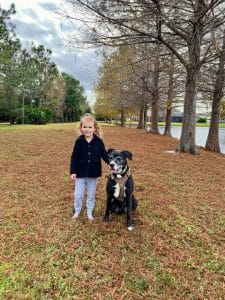
Confidence grows when children learn how to interact safely with dogs.
Teaching kids to interact safely with dogs is one of the most important responsibilities we have as parents and dog guardians. When children and dogs grow up together, the bond can be extraordinary. Dogs become confidants, adventure partners, and steady companions through every developmental stage. But safe, joyful relationships between kids and dogs don’t happen automatically. They are built intentionally—through education, supervision, empathy, and respect for both species.
As a force-free dog trainer in Miami, I believe safety begins with understanding. Dogs are not stuffed animals. They are living, breathing, sentient beings with emotions, preferences, and boundaries. When we take the time to teach children how to read dog body language and interact appropriately, we protect both kids and dogs. We prevent bites. We reduce stress. And we build lifelong compassion.
Let’s walk through exactly how to do that—step by step.
Why Teaching Dog Safety Matters
According to the American Veterinary Medical Association, most dog bites involve familiar dogs and often occur during everyday interactions at home. That means prevention isn’t about “bad dogs.” It’s about misunderstood communication.
Children, especially under age 7, struggle with impulse control and reading subtle body language. Dogs, especially tolerant ones, often give many early warning signs before escalating. When adults miss those signs or assume “he’s fine, he loves kids”, we create risk.
The goal is not to make children afraid of dogs.
The goal is to teach children how to listen.
Rule #1: No Dog and Child Are Ever Left Unsupervised
This is non-negotiable.
Even the gentlest dog can react if startled, hurt, cornered, or overwhelmed. Supervision means active supervision, not scrolling your phone while they play nearby.
If you cannot supervise:
- Use baby gates.
- Use crates.
- Create separate spaces.
- Rotate access.
Management prevents mistakes. And prevention is always kinder than correction.
Teach Children to Ask Permission—Every Time
Before approaching any dog, family dog or stranger, children should learn one simple habit:
“May I pet your dog?”
If the dog is your own, permission still matters. The adult should confirm:
- The dog is comfortable.
- The dog is not sleeping.
- The dog is not eating.
- The dog is not chewing a high-value item.
- The dog is not recovering from stress.
This teaches kids that dogs have agency. That consent matters. That we don’t touch without checking.
That lesson extends far beyond dogs.
How to Greet a Dog Safely
When greeting is appropriate, teach children this calm, structured routine:
- Stand still.
- Keep hands by sides.
- Let the dog approach first.
- Pet under the chin or on the chest and avoid reaching over the head.
- Count to three.
- Pause.
If the dog leans in? Continue gently.
If the dog moves away? Stop immediately.
This “three-second rule” teaches children to observe rather than to overwhelm.
Teach Kids to Recognize Dog Body Language
Children are capable of learning emotional literacy when we break it down clearly.
Here are simple phrases kids understand:
A Happy Dog Looks Like:
- Loose, wiggly body
- Soft eyes
- Relaxed mouth
- Tail moving in a wide, sweeping motion
A Dog Who Needs Space Might Show:
- Turning the head away
- Licking lips
- Yawning when not tired
- Whale eye (white of eye showing)
- Stiff body
- Tucked tail
- Growling
It is critical that children understand:
Growling is communication, not “being bad.”
If a dog growls, adults should calmly separate and reassess, not punish the dog. Punishing growling removes the warning system and increases the risk of bites.
The “No Go” Zones
Children should be explicitly taught that dogs should never be disturbed when:
- Sleeping
- Eating
- Chewing bones
- In a crate
- Caring for puppies
- Hiding
Crates are bedrooms. Bedrooms deserve privacy.
If a dog chooses distance, we respect it.
Teach Gentle Touch (And What Not to Do)
Children must be taught what gentle actually means.
No:
- Hugging tightly
- Sitting or lying on the dog
- Pulling ears or tails
- Riding the dog
- Grabbing collars
- Climbing into beds
- Putting faces in dog faces
Many bites occur during face-to-face contact. Even tolerant dogs can feel trapped.
Instead, teach:
- Slow petting
- Flat hands
- Short sessions
- Calm voices
Model the behavior yourself. Kids copy adults more than they follow instructions. I have seen so many parents tell their kids not to kiss the dog, then grab their dog by the face and kiss it.
What To Do If an Unknown Dog Approaches
Children should know how to respond if a loose dog approaches them.
Teach them to:
- Stand still.
- Be a “tree.”
- Cross arms.
- Look down at feet.
- Stay quiet.
If knocked down:
- Curl into a ball.
- Protect face and neck.
- Stay still.
The Centers for Disease Control and Prevention supports teaching these protective behaviors as part of bite prevention education.
Practice this as a game so it becomes automatic. Don’t wait until you need it to practice it. At that time, it may be too late.
Building a Child-Friendly Dog
Safety is not only about educating kids.
It is also about supporting the dog.
If you have a puppy, proactive socialization is essential. Positive, structured exposure to calm, respectful children can build resilience. Avoid flooding. Avoid chaotic environments.
If you have an adult dog, watch for subtle signs of stress. Advocate for your dog if they look uncomfortable.
Force-free training helps here. Reward-based methods build trust and predictability. Dogs who feel safe are less likely to escalate.
If your dog has shown signs of fear or discomfort around children, seek guidance from a credentialed, force-free trainer. Early support prevents long-term issues.
Age-Specific Guidance
Toddlers (Under 4)
- 100% active supervision.
- No direct interaction without adult support.
- Teach “gentle hands.”
- Focus on parallel activities (reading near the dog, tossing treats with adult help).
Early Elementary (5–8)
- Can begin learning body language basics.
- Practice the three-second rule.
- Teach a safe greeting routine.
- Reinforce “ask first.”
Older Children (9+)
- Can help with training games.
- Can learn to reinforce cues like “sit.”
- Can participate in structured walks (with adult oversight).
- Can learn about enrichment and consent.
Regardless of age, supervision remains essential.
Teaching Through Games
Kids learn best through play. Try:
The “Consent Test”
Pat the side of your leg to encourage the dog to approach. If the dog approaches with loose body language, thenyou can proceed to the next step.
Pet the dog for three seconds. Pause. Ask:
“Does he want more?”
If the dog leans in → yes.
If the dog steps away → no.
Emotion Detective
Show pictures of dogs displaying different body language. Ask:
“How is this dog feeling?”
Gentle Hands Practice
Use stuffed animals to demonstrate calm touch.
When children feel empowered as helpers, they’re more likely to cooperate.
When Things Go Wrong
If a dog snaps or growls:
- Stay calm.
- Separate safely.
- Do not punish the dog.
- Evaluate what preceded the behavior.
- Adjust management immediately.
- Seek professional support if needed.
Most bites are preventable when we respond early.
A growl is information.
Listen to it.
The Role of Parents
Children cannot be solely responsible for safety.
Adults must:
- Advocate for the dog.
- Interrupt rough play.
- Model consent.
- Maintain realistic expectations.
- Prevent overwhelm during parties or gatherings.
Holiday chaos, loud birthday parties, and crowded homes increase stress. Plan ahead. Provide your dog with a quiet retreat space.
Teaching Empathy Through Dogs
When we teach children to read dog body language, we are also teaching emotional intelligence.
We’re teaching:
- Boundaries
- Consent
- Respect
- Patience
- Compassion
Those are lifelong skills.
Dogs give children a daily opportunity to practice empathy.
Special Considerations for Visiting Dogs
Even if your family dog is comfortable with your children, visiting dogs are different.
Rules for guests:
- The dog remains leashed initially.
- Short introductions.
- Clear rules before interaction.
- No feeding without permission.
- No chasing games.
Never assume temperament.
Red Flags to Watch For
Seek professional help if you observe:
- Freezing when children approach
- Avoidance or hiding
- Growling around specific situations
- Guarding toys or food
- Snapping during petting
- Increased anxiety after child interaction
These behaviors are not moral failures. They are communication signals.
Intervening early prevents escalation.
A Force-Free Perspective on Prevention
Punishment does not create safety. It suppresses warning signs.
Force-free training focuses on:
- Reinforcing calm behavior
- Teaching alternative behaviors
- Managing environments
- Respecting emotional thresholds
- Building trust
When dogs feel heard, they don’t need to escalate.
When children feel educated, they behave more predictably.
When adults supervise consistently, risk drops dramatically.
Creating a Safe Family Culture
Ultimately, safe kid-dog interactions are about culture.
In a safe home:
- Dogs are not forced into affection.
- Children are not shamed for curiosity.
- Adults remain attentive.
- Boundaries are respected.
- Mistakes are handled calmly.
- Education is ongoing.
Dogs don’t need to be perfect.
Awareness is key.
Children don’t need to be perfect.
You need supervision and modeling.
Final Thoughts
Dogs enrich childhood in extraordinary ways. They teach responsibility. They teach empathy. They teach emotional awareness. But safety is never accidental.
When we commit to teaching children to interact respectfully with dogs and to supporting dogs through force-free training, we create relationships built on trust rather than tolerance.
Every safe interaction is an investment.
Every moment of supervision matters.
Every lesson in consent shapes both species.
If you’d like guidance in helping your family build safe, respectful interactions between your children and your dog, reach out to learn how we can help.
About the Author
Katie Casell, KPA CTP, CPDT-KA, FFCP, FDM, CSAT, is the founder of Dances With Dogs in Miami. She specializes in force-free dog training and helping families create safe, enriching relationships with their dogs.