
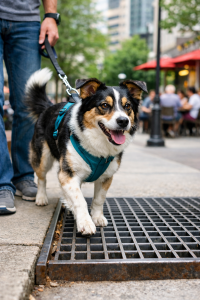
New environments don’t just mean new places—novel surfaces like metal grates can help build real-world confidence when introduced thoughtfully.
Confidence is not something a dog is simply born with; it is something that develops over time through experiences. One of the most powerful ways to nurture confidence in dogs is by gently introducing them to novel environments, meaning places, sights, sounds, and surfaces they haven’t encountered before.
For many dogs, unfamiliar situations can feel intimidating. A new hallway in an apartment building, the noise of a busy street, or the unfamiliar texture of a metal grate can cause hesitation or fear. But when dogs are thoughtfully exposed to new environments in a safe, positive way, those experiences can transform uncertainty into curiosity.
Over time, these positive exposures help create a dog who can navigate the world calmly and adapt to new situations with resilience.
In this article, we’ll explore:
- What “novel environments” mean for dogs
- Why new experiences build confidence
- How to safely introduce your dog to new places
- Mistakes to avoid when exposing dogs to unfamiliar environments
- Practical exercises you can start using today
What Are Novel Environments for Dogs?
A novel environment is simply a place or situation that is new to your dog.
That could include:
- A different walking route
- A new park or trail
- An unfamiliar building or parking garage
- Busy city sidewalks
- Pet-friendly stores
- Outdoor restaurant patios
- Elevators and stairwells
- Beaches, docks, or boardwalks
- Different walking surfaces like gravel, sand, or metal grates
Even small changes can count as novel environments. Walking a new path through your neighborhood can provide valuable learning opportunities.
From a training perspective, novelty matters because it challenges your dog’s brain in a productive way. Just like humans, dogs grow through experience. Every time they successfully navigate something new, their brain learns an important lesson:
“I can handle this.”
Why Novel Experiences Build Confidence in Dogs
Confidence grows when a dog learns that unfamiliar situations are safe and manageable.
When dogs explore new environments with positive reinforcement, several important things happen.
1. The Brain Builds Positive Associations
Dogs are constantly forming associations between experiences and emotions.
If a dog encounters something new and receives treats, praise, or play, the brain begins linking novelty with positive outcomes.
Over time, new environments become less intimidating and more exciting.
2. Dogs Learn Problem-Solving Skills
Novel environments often require dogs to think.
They may need to:
- Step onto an unfamiliar surface
- Navigate around obstacles
- Walk past new objects
- Process unfamiliar sounds or smells
Each small challenge builds mental flexibility. Dogs who develop these skills tend to be less reactive and more adaptable.
3. Exposure Reduces Fear of the Unknown
Many fears develop simply because something is unfamiliar.
A dog who has only walked quiet suburban streets may find a bustling urban sidewalk overwhelming. But if they’ve gradually experienced a variety of environments, those same stimuli feel far less intimidating.
Experience creates predictability, and predictability reduces fear.
The Confidence Building Window: Why Early Experiences Matter
Puppyhood is a critical period for exposure to new environments. During the socialization window, generally between 3 and 14 weeks of age, puppies are especially receptive to learning about the world.
Positive exposures during this time can have lifelong benefits.
However, confidence building is not limited to puppies. Adult dogs can absolutely develop greater resilience through well-structured experiences.
The key difference is that adult dogs may require slower introductions and more support when encountering something unfamiliar.
Signs Your Dog Is Building Confidence
When dogs begin gaining confidence in novel environments, you may notice subtle changes in their behavior.
These include:
- Moving forward willingly toward new areas
- Sniffing and investigating surroundings
- Maintaining a loose, relaxed body posture
- Recovering quickly from startling sounds
- Offering engagement with their handler
Curiosity is often a sign that a dog feels safe enough to explore.
How to Introduce Your Dog to New Environments Safely
Exposure should always be intentional and gradual. Flooding a dog with overwhelming experiences can create fear rather than confidence.
Instead, follow these principles.
1. Start Small
When it comes to building confidence, the goal isn’t to throw your dog into the most exciting or challenging environment right away, it’s to set them up for success.
Start with environments that feel only slightly different from what your dog already knows. This might look like taking a new route through your neighborhood, visiting a quiet park instead of a busy one, or choosing off-peak hours at a pet-friendly store.
For many dogs, especially those who are sensitive or easily overwhelmed, you can begin even earlier, right at home.
Introducing simple, novel items in a familiar space allows your dog to experience “new” without the added pressure of an unfamiliar environment. A cardboard box, a different walking surface, or a new object placed in the room can all serve as low-stress opportunities for exploration. These small moments teach your dog an important lesson: new doesn’t have to mean scary.
As your dog becomes more comfortable, you can gradually increase the level of difficulty by adding new locations, sounds, and distractions. Think of this process as layering experiences rather than jumping levels.
Confidence is built through repetition and success, not intensity. By starting small and progressing thoughtfully, you create a dog who feels safe enough to be curious, and curiosity is where real confidence begins.
2. Pair New Experiences With Rewards
Bring high-value treats on outings.
When your dog notices something new, like a strange sound or object, mark the moment with praise or a treat.
This simple exercise helps your dog associate novelty with positive outcomes.
3. Let Your Dog Set the Pace
Confidence cannot be rushed.
If your dog pauses, sniffs, or hesitates, allow them time to process. Forcing a dog toward something scary can damage trust.
Instead, allow curiosity to guide exploration.
4. Keep Sessions Short
Quality matters more than duration.
Five minutes of calm exploration in a new environment can be more valuable than a long outing that overwhelms your dog.
Short, successful experiences build momentum.
5. Use Distance Strategically
If something is intimidating, a skateboard, another dog, loud construction, create distance.
Distance allows your dog to observe without feeling threatened.
As comfort increases, you can gradually move closer.
Confidence-Building Exercises Using Novel Environments
Here are a few practical exercises you can incorporate into daily walks.
Exploration Walks
Instead of focusing on distance or speed, dedicate certain walks to exploration.
Allow your dog to sniff, investigate, and move at their own pace.
These “sniffari” walks provide rich sensory input and encourage curiosity.
Surface Confidence Training
Expose your dog to different surfaces, such as:
- Gravel
- Docks, boardwalks, marinas
- Sand
- Metal grates
- Rubber flooring
Reward your dog for stepping onto and exploring each surface.
This helps dogs become comfortable with unexpected textures underfoot.
Urban Confidence Building
City environments offer many learning opportunities.
Practice calm walking near:
- Bicycles
- Strollers
- Outdoor dining areas
- Bus stops
- Parking garages
- Trash receptacles
Start at a distance and reward calm observation.
Object Investigation Games
Place safe household objects in your yard or living room:
- Cardboard boxes
- Plastic bins
- Folded chairs
- Balance discs
Encourage your dog to investigate and reward curiosity.
This simple exercise can build bravery and problem-solving skills.
Mistakes to Avoid When Introducing Novel Environments
Even well-intentioned owners sometimes make mistakes when exposing dogs to new situations.
Avoid these common pitfalls.
Flooding the Dog
Flooding occurs when a dog is forced into an overwhelming situation with no escape.
Examples include:
- Taking a fearful dog directly into a crowded festival
- Forcing a hesitant dog into a noisy, high-traffic environment
- Dragging a dog toward something they are clearly afraid of
Flooding often increases fear rather than resolving it.
Ignoring Stress Signals
Dogs communicate discomfort through body language.
Watch for signs such as:
- Lip licking
- Yawning
- Turning away
- Tail tucked
- Stiff posture
- Avoidance behaviors
If you notice these signals, reduce the intensity of the situation.
Moving Too Fast
Confidence grows through many small successes, not one big leap.
Progress may look like:
- Looking at a new object
- Taking one step closer
- Sniffing it briefly
Each step matters.
Why Confidence Building Is Especially Important for Urban Dogs
Dogs living in dense urban environments, like many neighborhoods in Miami, encounter a wide range of unpredictable stimuli.
Elevators opening unexpectedly, dogs appearing in hallways, loud traffic, and crowded sidewalks can create constant surprises.
For these dogs, exposure to a variety of environments helps them develop the emotional resilience needed to navigate daily life.
Confident dogs are better equipped to:
- Handle unexpected encounters
- Recover from startling noises
- Walk calmly through busy spaces
- Focus on their handler in distracting environments
The Long-Term Benefits of Novel Experiences
Regular exposure to novel environments does more than reduce fear. It helps create a dog who is adaptable and emotionally resilient.
Confident dogs tend to:
- Recover quickly from surprises
- Display fewer reactive behaviors
- Enjoy exploring new places
- Maintain better focus during training
- Experience less overall stress
In many ways, confidence is one of the most valuable life skills we can give our dogs.
Final Thoughts
Helping a dog build confidence doesn’t require dramatic adventures or complicated training plans. Often, it begins with something as simple as taking a different route on your daily walk.
Each new environment offers your dog the opportunity to learn, explore, and build resilience.
With patience, thoughtful exposure, and plenty of positive reinforcement, novelty becomes something your dog looks forward to rather than fears.
The result is a dog who can move through the world with curiosity instead of caution—and that confidence benefits both ends of the leash.
If your dog struggles with fear, reactivity, or anxiety in new environments, professional guidance can make a tremendous difference.
A skilled force-free trainer can help you develop a step-by-step confidence-building plan tailored to your dog’s needs.
Reach out to Dances With Dogs to learn how we can help your dog feel more comfortable, curious, and confident in the world around them.