
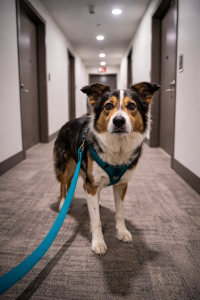
For reactive dogs living in apartment buildings, stepping into a hallway can feel unpredictable. Elevators, neighbors, and other dogs may appear suddenly, making these spaces especially challenging.
Living in Miami comes with stunning views, vibrant neighborhoods, and a skyline filled with luxury high-rises. From Brickell to Edgewater to Coral Gables, vertical living is part of our culture.
But if you share an elevator with dozens of neighbors — many of whom also have dogs — apartment life can feel like a daily behavioral challenge course.
If you’re raising or living with a reactive dog in a Miami apartment, you are not alone. And you are not failing.
You are navigating one of the most complex training environments possible.
Let’s talk about why apartment living can intensify reactivity and how to train thoughtfully and effectively using force-free, science-based methods.
Why Miami Apartment Living Is So Challenging for Reactive Dogs
Miami’s housing landscape is uniquely vertical. Many residents live on the 10th, 20th, or 40th floor. That means every single potty break includes:
- Hallways with blind corners
- Elevator rides
- Lobby traffic
- Courtyards or shared green spaces
- Sudden encounters with unfamiliar dogs
Unlike suburban homes, where you can scan the street before stepping outside, apartment dwellers face “surprise exposures” daily:
- Elevator doors open… and there’s another dog inches away.
- A neighbor exits their unit at the same moment you do.
- Someone turns a corner unexpectedly in the hallway.
- A dog steps out of the elevator just as you step in.
For a sensitive or reactive dog, these situations are intense. There is limited space. There is no easy escape route. And there is little control over distance.
Distance is one of the most powerful regulators of canine emotion. When dogs cannot create space from a trigger, stress escalates quickly.
High-rise living often means repeated, unavoidable exposure at close range, a perfect storm for reactive behavior.
What Reactivity Actually Is (And What It Isn’t)
Reactivity is not dominance.
It is not disobedience.
It is not your dog trying to “be in charge.”
Reactivity is an emotional response, most often rooted in fear, frustration, or over-arousal.
In apartment environments, triggers are:
- Sudden
- Close
- Frequent
- Unpredictable
That unpredictability keeps the nervous system on alert. Over time, repeated stress without recovery can lower a dog’s threshold, meaning reactions happen faster and more intensely.
If your dog is already scanning the hallway before you even leave your unit, that’s not stubbornness. That’s anticipation driven by previous experiences.
Our job is not to suppress the behavior.
Our job is to change the emotional experience.
The First Priority: Emotional Regulation, Not Obedience
When you live in a Miami apartment with a reactive dog, the goal is not simply getting a “sit” in the lobby.
The priority is nervous system regulation.
Force-free training focuses on:
- Reducing overall stress
- Increasing predictability
- Reinforcing calm behaviors
- Teaching alternative responses
- Changing emotional associations through counterconditioning
We are not trying to stop barking at all costs.
We are building resilience.
Elevator Training: Teaching Calm in Confined Spaces
Elevators are often the most difficult part of apartment living for reactive dogs.
Here’s how we approach them:
Teach a Protective Position
Train your dog to stand behind you or between your legs as elevator doors open. This creates a visual and physical barrier between your dog and whatever may be on the other side.
You become the buffer.
Reinforce Door Neutrality
Practice rewarding your dog for calmly observing elevator doors opening and closing when no one is present. Build the skill before adding the trigger.
Advocate for Space
If doors open and another dog is inside, step back and allow the elevator to go. Waiting for the next one is not avoidance. It is smart management.
Management protects learning.
Keep the Leash Short but Loose
Tight leashes increase tension and can amplify reactions. A shorter leash with relaxed handling gives you control without adding stress.
Hallway Skills: Your Emergency Tools
Hallways are narrow, echoing spaces with blind corners. Teaching the following skills can make a significant difference:
- A cheerful U-turn cue (“This way!”)
- A reinforced check-in behavior (eye contact while walking)
- Calm default behavior at doors and corners
Practice these skills when the hallway is empty. Then gradually introduce mild distractions at a safe distance.
Reactive dog training must follow progression:
- Low intensity
- Predictable exposure
- Reinforced calm behavior
- Gradual increase in difficulty
Skipping steps often leads to setbacks.
Preparing for Surprise Encounters
You cannot eliminate surprises in a high-rise building. But you can prepare for them.
Create an “elevator kit” mindset:
- High-value reinforcers readily accessible
- A rehearsed U-turn cue
- Clear body positioning
- A plan to create distance quickly
- Teach a rehearsed positioning cue such as “get behind.”
If a trigger appears unexpectedly:
- Increase distance immediately if possible
- Avoid jerking the leash
- Reinforce even small moments of disengagement
The goal is not perfection.
It’s faster recovery and reduced intensity over time.
Understanding Trigger Stacking in Apartment Dogs
Many apartment dogs experience what we call trigger stacking.
One elevator encounter.
Then lobby noise.
Then construction outside.
Then another dog in the courtyard.
By midday, the nervous system is saturated.
Signs of trigger stacking include:
- Heightened vigilance
- Faster reactions
- Reduced ability to respond to cues
Consider:
- Shorter, more frequent potty breaks
- Quiet decompression walks during off-peak hours
- Indoor enrichment (sniff games, food puzzles, nose work)
- Strategic avoidance of high-traffic times
Not every outing needs to be long. Sometimes it needs to be intentional.
Living on Higher Floors Adds Complexity
The higher you live, the more transitions your dog experiences before even reaching the outdoors:
Apartment → hallway → elevator → lobby → street.
Each transition increases arousal.
Build calm into each step:
- Pause before exiting your unit.
- Reinforce waiting at the elevator.
- Allow decompression time once outside.
Transitions are not just logistics. They are training opportunities.
Courtyards and Shared Dog Areas
Many Miami buildings offer communal dog parks or green spaces. For reactive dogs, these areas can be overwhelming.
Instead of assuming exposure will “help them get used to it,” approach thoughtfully:
- Visit during low-traffic times
- Work from a distance first
- Leave before escalation occurs
- Advocate for space
More exposure does not equal faster progress.
Better exposure creates better learning.
What Not to Do
It is common for apartment residents to feel pressure to “fix” reactive behavior quickly.
This often leads to:
- Leash corrections
- Prong collars
- Shock collars
- Forcing proximity
These methods may temporarily suppress visible behavior. But they do not change the emotional state driving it.
In confined spaces like elevators, discomfort can amplify fear, intensifying negative associations. When discomfort becomes paired with the sight of other dogs, reactivity can worsen over time.
Behavior suppression is not behavior modification.
Realistic Goals for Apartment Reactive Dogs
With consistent, force-free training, progress often looks like:
- Reduced reaction intensity
- Faster recovery time
- Increased handler engagement
- More predictable coping strategies
- Improved confidence navigating transitions
Not every dog will love crowded elevators.
Success may mean calm coexistence, not social enthusiasm.
And that is more than enough.
When Professional Support Matters
Apartment reactivity escalates quickly because rehearsal opportunities are frequent.
If your dog:
- Lunges intensely
- Growls or snaps in confined spaces
- Redirects onto the leash
- Appears hypervigilant before leaving your unit
Working with a credentialed, force-free professional who understands high-rise living can make a significant difference.
This environment requires strategy, not quick fixes.
Final Thoughts
Living in a Miami apartment with a reactive dog can feel stressful. You may worry about neighbors judging you in the elevator. You may feel tension every time you step into the hallway.
But reactive dogs are not bad dogs.
And apartment living does not mean you are destined for chaos.
With thoughtful management, emotional regulation training, and compassionate handling, your dog can learn to navigate high-rise life with increasing confidence.
And over time, you can step into that elevator with a little more ease, too.