
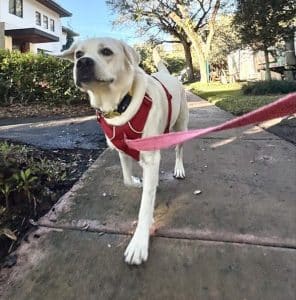
Dog walking with a loose leash in Miami
If your dog turns every walk into a tug-of-war, you’re not alone. Pulling is one of the most common frustrations dog owners face—and it can make something that should be enjoyable feel stressful, embarrassing, or even unsafe.
The good news: yes, walks can absolutely still be safe and fun, even if your dog pulls. But the path there usually isn’t “just get a stronger leash” or “walk them until they’re tired.” It’s about understanding why pulling happens, setting up the right gear and environment, and teaching skills that make loose-leash walking easier for both of you.
Below is a force-free, practical guide to safer, happier walks with a dog who pulls.
Why Do Dogs Pull on Leash?
Pulling isn’t your dog being “dominant” or trying to control you. Most dogs pull for one simple reason:
- Pulling works. If your dog pulls and gets to the sniff spot, the tree, the other dog, or the front door, pulling is reinforced.
Other common reasons include:
- Excitement and big feelings: The outside world is stimulating.
- Lack of practice: Loose-leash walking is a skill, not a default.
- Breed tendencies: Many dogs were bred to move forward with purpose.
- Under-enrichment: Dogs who don’t get enough sniffing, chewing, or play may “explode” on walks.
- Anxiety: Some dogs pull to increase distance from scary things or to get home.
- Equipment issues: A collar that’s uncomfortable, a leash that’s too short, or a harness that doesn’t fit can make pulling worse.
Understanding the “why” helps you choose the right plan. A dog who pulls from excitement needs different support than a dog who pulls from fear.
First: Safety (Because Pulling Can Be Risky)
A pulling dog can create real safety concerns:
- For your dog: choking, coughing, pressure on the trachea, increased eye pressure in some cases, and a higher risk of injury if they lunge.
- For you: shoulder strain, wrist injuries, falls, or being pulled into traffic.
- For others: a dog who surges forward can startle people, knock kids over, or trigger other dogs.
If your dog is strong, reactive, or unpredictable, it’s not “overreacting” to prioritize safety first.
Quick safety checklist
- Use a sturdy leash (6-8 feet is usually ideal).
- Avoid retractable leashes (they add tension and reduce control. Plus, they’re dangerous).
- Choose equipment that reduces strain (more on that next).
- Walk in lower-traffic areas while you’re training.
- If your dog lunges at dogs/people, work with a qualified force-free trainer.
The Best Gear for Dogs Who Pull (Force-Free Options)
Gear won’t “fix” pulling by itself, but it can make walks safer and give you a fighting chance while you train.
Harnesses: your best starting point
For many dogs who pull, a well-fitted harness is safer than a collar.
Look for: – A Y-shaped front that allows shoulder movement – Snug but comfortable fit (no rubbing behind the armpits) – A back clip and a front clip.
Front-clip harnesses
A front-clip harness can reduce pulling power by redirecting the dog’s body when they surge forward.
Pros: can help you regain control and reduce strain.
Cons: Some dogs find it frustrating at first; a poor fit can restrict movement.
What to avoid
- Prong collars
- Choke chains
- Shock/e-collars
These tools may suppress behavior in the moment, but they can increase stress and fallout (fear, avoidance, reactivity), and they don’t teach your dog what to do instead.
Can Walks Still Be Fun While You’re Training?
Yes, and they should be.
One of the biggest mistakes people make is turning every walk into a strict training session. If your dog never gets to sniff, explore, or decompress, frustration builds, and pulling often gets worse.
A better approach is to balance:
- Training walks (short, structured, skill-building)
- Decompression walks (sniffing, exploring, low pressure)
The Foundation Skill: Reinforcing Loose Leash
Loose-leash walking is really just a pattern:
- Dog stays within leash range
- Leash stays slack
- Good things happen
Start in the easiest place possible
If your dog pulls hard outside, start practicing inside your home, hallway, or driveway. If you only practice in the hardest environment, you’ll both feel like you’re failing.
Reward what you want
Bring high-value treats (tiny pieces) and reward:
- When the leash goes slack
- When your dog checks in with you
- When your dog chooses to walk near you
You’re not “bribing.” You’re teaching.
Simple Techniques That Actually Help
Here are force-free strategies that can make a noticeable difference.
1. The “Stoplight” method
- Green light: leash is slack → keep moving.
- Red light: leash is tight → stop.
The moment your dog creates slack again (even by shifting weight back), you move forward.
This teaches: pulling doesn’t work, slack leash does.
2. The “U-turn” (for big distractions)
If your dog locks onto something and starts to surge:
- Say a cheerful cue like “This way!”
- Turn and walk the other direction
- Reward when your dog follows
This is especially useful for dogs who pull toward other dogs, squirrels, or busy areas.
3. Reinforce sniffing as a reward
Sniffing is powerful enrichment. Use it strategically:
- Ask for 2–3 steps of slack leash
- Then say “Go sniff!” and let your dog investigate
Now your dog learns: walking politely earns access to the environment.
4. Shorter sessions, more wins
If walks are a daily battle, try:
- Two 10-minute walks instead of one 30-minute walk
- Choose the quietest times of day
- End on a success, not a meltdown
What If My Dog Is Pulling Because They’re Overexcited?
For high-energy dogs, the goal isn’t to “drain them” with longer walks. Overarousal can actually increase pulling.
Instead, add enrichment that lowers stress and meets needs:
- Sniffing games at home
- Food puzzles
- Scatter feeding in the yard
- Tug with rules
- Training sessions (sit, touch, find it)
A dog who gets their brain needs met often walks better.
What If My Dog Pulls Because They’re Anxious or Reactive?
If your dog pulls to get away from something scary, or pulls toward triggers while barking/lunging, this is not just a “manners” issue.
In those cases, focus on:
- Creating distance from triggers
- Choosing low-traffic routes
- Rewarding calm observation
- Working with a qualified force-free trainer using desensitization and counterconditioning
A reactive dog may look “stubborn,” but they’re often overwhelmed.
Common Mistakes That Keep Pulling Going
Even very loving owners accidentally reinforce pulling. Here are the big ones:
- Letting pulling reach the destination: if pulling gets them to the park, it’s reinforced.
- Only bringing treats sometimes: inconsistent reinforcement slows learning.
- Using a leash that’s too short: dogs need room to move naturally.
- Expecting perfection too soon: loose-leash walking takes time and repetition.
- Making walks all work, no joy: frustration creates more pulling.
A Realistic Training Timeline
How long does it take to improve pulling?
- Some improvement: often within 1–2 weeks with consistent practice
- Solid progress: 4–8 weeks for many dogs
- Big behavior change: longer if your dog is reactive, anxious, or has years of rehearsal
The goal isn’t a “robot heel.” The goal is a walk that feels safe, connected, and enjoyable.
When to Get Professional Help
Consider working with a credentialed, force-free trainer if:
- Your dog is strong enough to pull you off balance
- You’re worried about safety near roads
- Your dog lunges/barks at dogs, moving objects, wildlife, or people
- You feel anxious before walks
- You’ve tried consistently and feel stuck
A good trainer will help you choose the right equipment, create a step-by-step plan, and tailor it to your dog’s emotions, not just their behavior.
The Bottom Line
A dog who pulls isn’t a “bad dog.” They’re a dog who has learned that pulling works, or a dog whose emotions are running high in a stimulating environment.
With the right gear, a realistic plan, and a force-free approach that balances training with enrichment, walks can absolutely become safe and fun again.